

AI

AI Is Making Average Content Easier to Create. That’s the Problem.

Google’s latest AI content guidance reinforces a problem we’ve seen in SEO for years: when everyone uses the same tools and follows the same formulas, original expertise becomes the real competitive advantage.

October 14, 2026
October 14, 2026
Written by

Overview:

Join other SEO and marketing professionals staying up-to-date with TruLaw Marketing.

Key Takeaways

  • AI is making it easier than ever to produce content at scale, but when everyone relies on the same tools, information, and formulas, the result is often more generic content that offers little original value.

  • Google's updated guidance reinforces the importance of human oversight in AI-generated content, emphasizing that accuracy, originality, and thoughtful review remain essential even as AI becomes more integrated into search.

  • As AI-generated content becomes increasingly common, original expertise, firsthand experience, and audience-focused writing will become even more valuable. The competitive advantage in SEO won't come from producing more content, but from creating something genuinely useful that people can't find everywhere else.

Google recently updated its guidance around generative AI content, and the reaction from a lot of the SEO community was pretty predictable.

We know.

This is obvious.

Google is being vague again.

And, frankly, I agree with some of that criticism.

Google has never been particularly good at giving marketers concrete answers about what it wants. A lot of its guidance boils down to some version of “create good content for users,” without giving us much insight into how that content is actually being evaluated.

But I think people are missing the bigger takeaway from this update.

ai-generated content seo

Google is now explicitly telling publishers that manually fact-checking and reviewing AI-generated content is critical. And they aren’t just talking about articles. They specifically mention things like titles, meta descriptions, structured data and image alt text.

Is that groundbreaking? No.

Is it worth paying attention to? Absolutely.

Because when Google goes out of its way to clarify something, I think we should listen. And in this case, what they’re saying lines up pretty closely with a shift we started making at TruLaw Marketing years before AI-generated content became as prevalent as it is today.

We Had a Content Problem Before AI

AI didn’t create the problem I’m talking about. It just made it a whole lot easier to make it worse.

A few years ago, we started getting away from a keyword-first approach to content.

We still do keyword research. We still track rankings. We still look at competitors, search volume, related queries, Search Console data and all of the other things you would expect an SEO agency to look at.

But the keyword itself stopped being the driving force behind what we wrote.

There was a pretty simple reason for that.

Everyone was using the same tools.

You could put a keyword into any number of SEO platforms and get recommendations for how long your article should be, what related terms you should include, what questions you should answer and what topics you needed to cover.

The problem was that our competitors were doing the exact same thing.

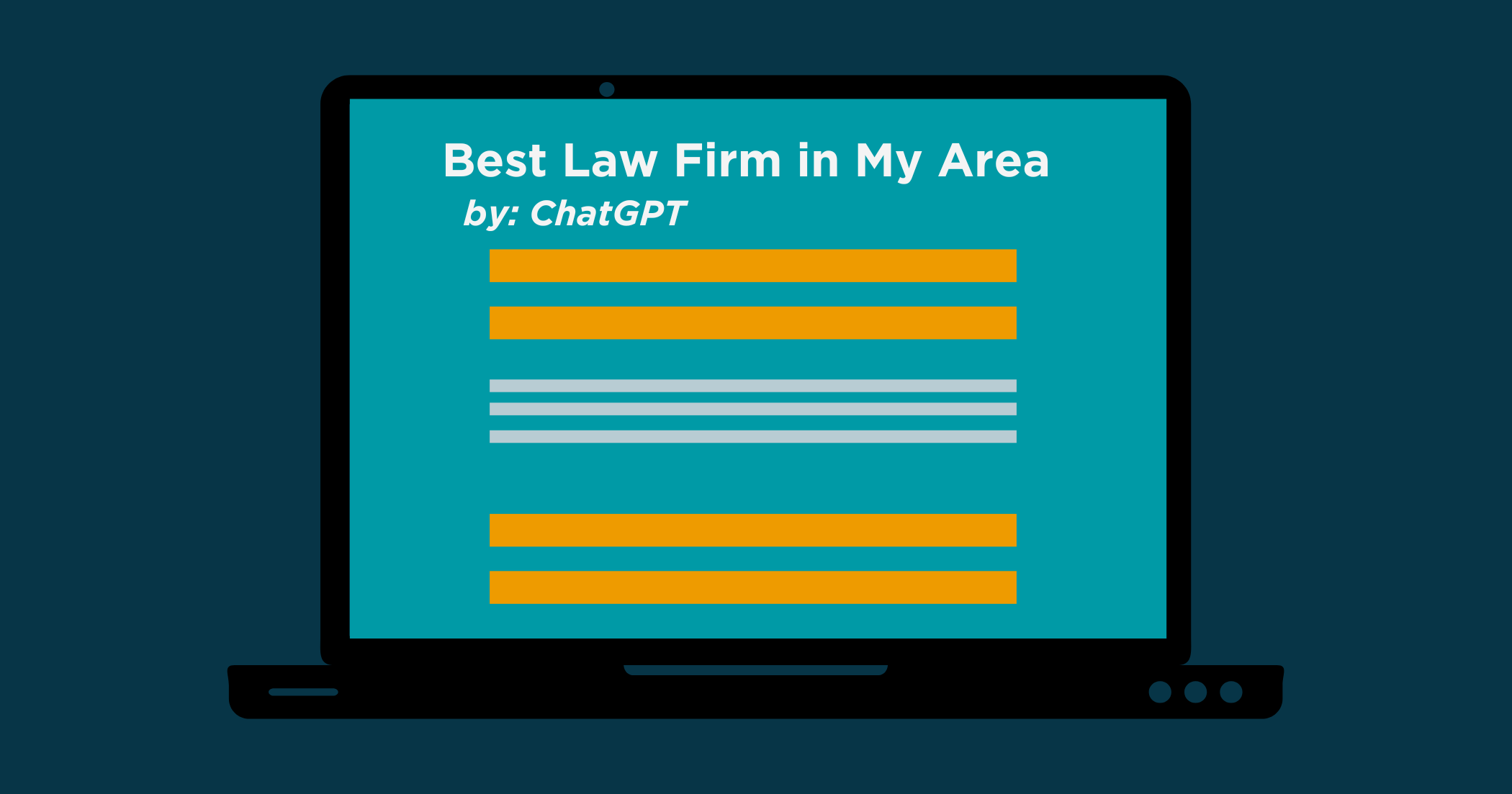
So you ended up with 20 law firms trying to rank for the same keyword, using the same tools to analyze the same search results, and getting roughly the same recommendations about what they should write.

Then everyone wondered why all 20 pages looked the same.

Same headings. Same FAQs. Same basic information. Same structure. Different law firm at the top.

It became a clusterfuck of content that technically checked all the SEO boxes without necessarily adding much of anything to the conversation.

That was happening before ChatGPT.

Now we have tools that can actually write all of that content for us.

Want to learn about these tools?

AI Makes It Really Easy to Be Average

I use AI every day.

Our team uses AI.

I think it’s one of the most important productivity tools marketers have gotten in a very long time.

But there’s a big difference between using AI as a tool and letting AI become your content strategy.

At a very basic level, generative AI is incredibly good at recognizing patterns and producing something that fits those patterns.

That’s what makes it so useful.

It’s also why I’m skeptical of the idea that the winning SEO strategy is going to be generating thousands of AI-written pages.

If you ask an AI model to write the best article about a particular subject, what information does it actually have to work with?

Unless you’re giving it something proprietary or original, it’s working from patterns in information that already exists.

It can summarize that information.

It can reorganize it.

It can make it sound better.

It can combine ideas in ways that are genuinely useful.

But it isn’t magically creating firsthand expertise that wasn’t there in the first place.

In a lot of cases, you’re essentially asking it to find some version of the mean of what already exists.

And I keep coming back to this:

If your strategy is to find the mean of what’s already performing, why would you expect to finish at the top?

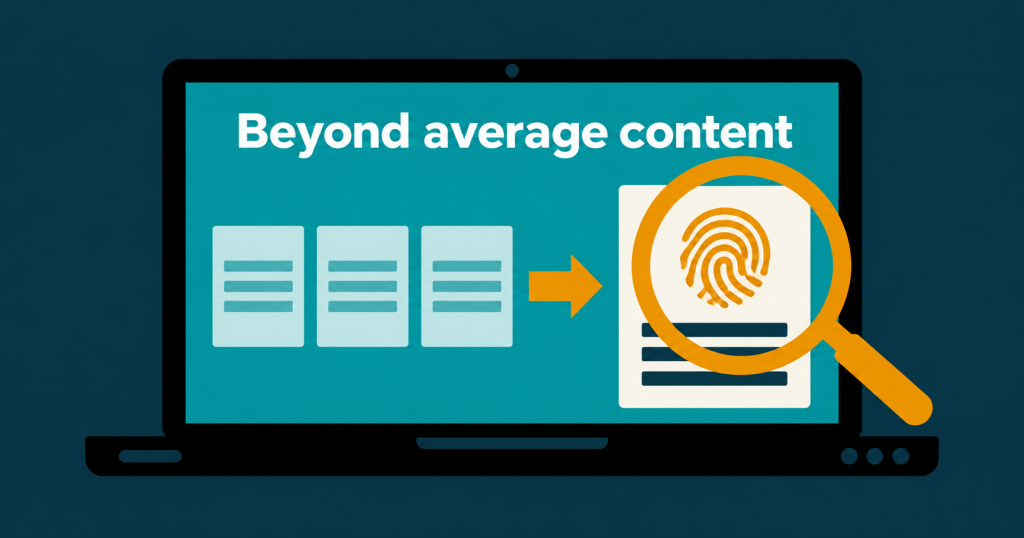
AI can get everybody to average much faster.

That’s impressive. It’s also a problem if your entire strategy depends on being better than everyone else.

Even the Easy Stuff Deserves Some Thought

This doesn’t only apply to 2,000-word articles.

There are plenty of things in SEO that are pretty formulaic.

Meta descriptions are a good example.

Give AI 500 pages and ask it to generate optimized meta descriptions for all of them, and it can do that in a fraction of the time it would take a person.

Same thing with image alt text, title tags, schema and a bunch of other repetitive tasks.

We absolutely use AI for things like this.

But this is one part of Google’s latest guidance that I think is worth paying attention to. They’re specifically calling out human review for these elements, too.

Because even when something is formulaic, there’s a difference between following a formula and actually thinking about what you’re trying to accomplish.

AI can look at a page and produce a perfectly acceptable meta description.

But is it the description that’s most likely to make this particular person click?

Maybe.

Maybe not.

Someone still needs to think about it.

That’s really the distinction I think gets lost in the conversation about AI and marketing.

The goal shouldn’t be to remove people from the process.

The goal should be to use AI so those people can spend more time on the parts of the process that actually require them.

The Internet Doesn’t Need More Versions of the Same Article

For legal marketing specifically, I think this is going to become a much bigger deal.

There are only so many generic ways you can explain what someone should do after a car accident.

There are only so many ways you can summarize a newly filed lawsuit.

And there are only so many times the Internet needs another article explaining the same five things about a particular mass tort.

AI makes producing the sixth, seventh and 500th version incredibly easy.

So what actually makes one worth reading?

Maybe an attorney has handled hundreds of these cases and can explain something that isn’t obvious from reading the statutes.

Maybe the firm has data nobody else has.

Maybe you interview the lawyer who is actually litigating these cases.

Maybe you have original reporting.

Maybe you can explain a complicated development in a way that someone without a law degree can actually understand.

Sometimes it’s not even that complicated. Maybe you just answer the question like a real attorney would answer it if the potential client were sitting across the table.

That’s the content I’m interested in creating.

And AI can absolutely help us create it.

But the expertise has to come from somewhere.

We Write for People First and Search Engines Second

That’s been our approach at TruLaw Marketing for the last few years.

We aren’t ignoring keywords.

We’re using them differently.

A keyword tells us something incredibly valuable: people are looking for this.

That’s the starting point.

Then we need to figure out what those people actually need when they get there.

What question are they really asking?

What information is missing from the pages that already rank?

What does our client know about this subject that isn’t already on Google?

What would make someone finish the article feeling like they actually learned something?

Then we worry about making sure Google understands it.

That’s a pretty meaningful difference from starting with a keyword, reverse-engineering the top ten results and essentially creating result number eleven.

And I’m becoming more convinced that this distinction is going to matter as AI becomes more prevalent.

Want a marketing agency that writes for your clients first?

Google Is Becoming an AI Company. That Doesn’t Make Human Expertise Less Important.

There’s an interesting irony in all of this.

Google is pushing AI incredibly hard.

Search itself is becoming more AI-driven. AI Overviews and other generative search experiences are changing the way information gets surfaced. Google obviously isn’t telling people to stay away from artificial intelligence.

Neither am I.

But at the same time, Google is reminding publishers that AI output needs human review and that its existing standards around quality and spam still apply.

I don’t think those two things conflict.

I think they’re related.

AI is making content nearly unlimited.

That means simply having content becomes less valuable.

If anybody can create 100 reasonably well-written articles in a fraction of the time it used to take to produce ten, the competitive advantage can’t just be producing more articles.

The things that are difficult to manufacture become more valuable.

Experience.

Expertise.

Original information.

Actual analysis.

A real point of view.

AI can help organize those things. It can help research them. It can help us work through huge amounts of information. It can help turn an attorney’s 30-minute conversation into several different useful pieces of content.

That’s where I think it gets really powerful.

But it can’t replace the original source of the expertise.

Google Didn’t Give Us a New Rule. It Gave Us Another Signal.

I understand why some SEOs rolled their eyes at Google’s announcement.

I’d love for Google to be more transparent, too.

But I don’t think we should confuse “Google didn’t tell us anything groundbreaking” with “this doesn’t matter.”

Google didn’t announce that AI content is banned. It isn’t.

They didn’t announce some new penalty that automatically punishes a page because AI helped create it.

What they did was reinforce something that I think is becoming increasingly important as the Internet gets flooded with AI-generated content:

Human judgment still matters.

And I think the marketers who treat AI purely as a way to produce more of the same content faster are going to miss the bigger opportunity.

Use AI.

We certainly are.

Use it to make your research faster. Use it to find things you missed. Use it to analyze data. Use it to handle repetitive work. Use it to help your writers and subject-matter experts do more.

But don’t use it as an excuse to stop thinking.

AI is making average content incredibly easy to create.

Our job isn’t to create average content faster.

It’s to create something worth finding.

Frequently Asked Questions

Jordan Terry Headshot 2025

Jordan Terry

As the Director, Jordan oversees many operations of TruLaw Marketing.

Before joining TruLaw Marketing, Jordan was the Director of Marketing at a mass tort law firm.

While there, his data-driven strategy established the firm as an industry leader in digital marketing — leading to a more than 400% increase in client acquisition.

Related Posts

Looking to learn more?

The posts below may be helpful for you to learn more about content marketing & SEO.