
SEO

Are Paid Lawyer Directories Worth the Money?

Some are worth the money, but not for the reasons the directories are selling you.

October 20, 2026
October 20, 2026
Written by
Reviewed by
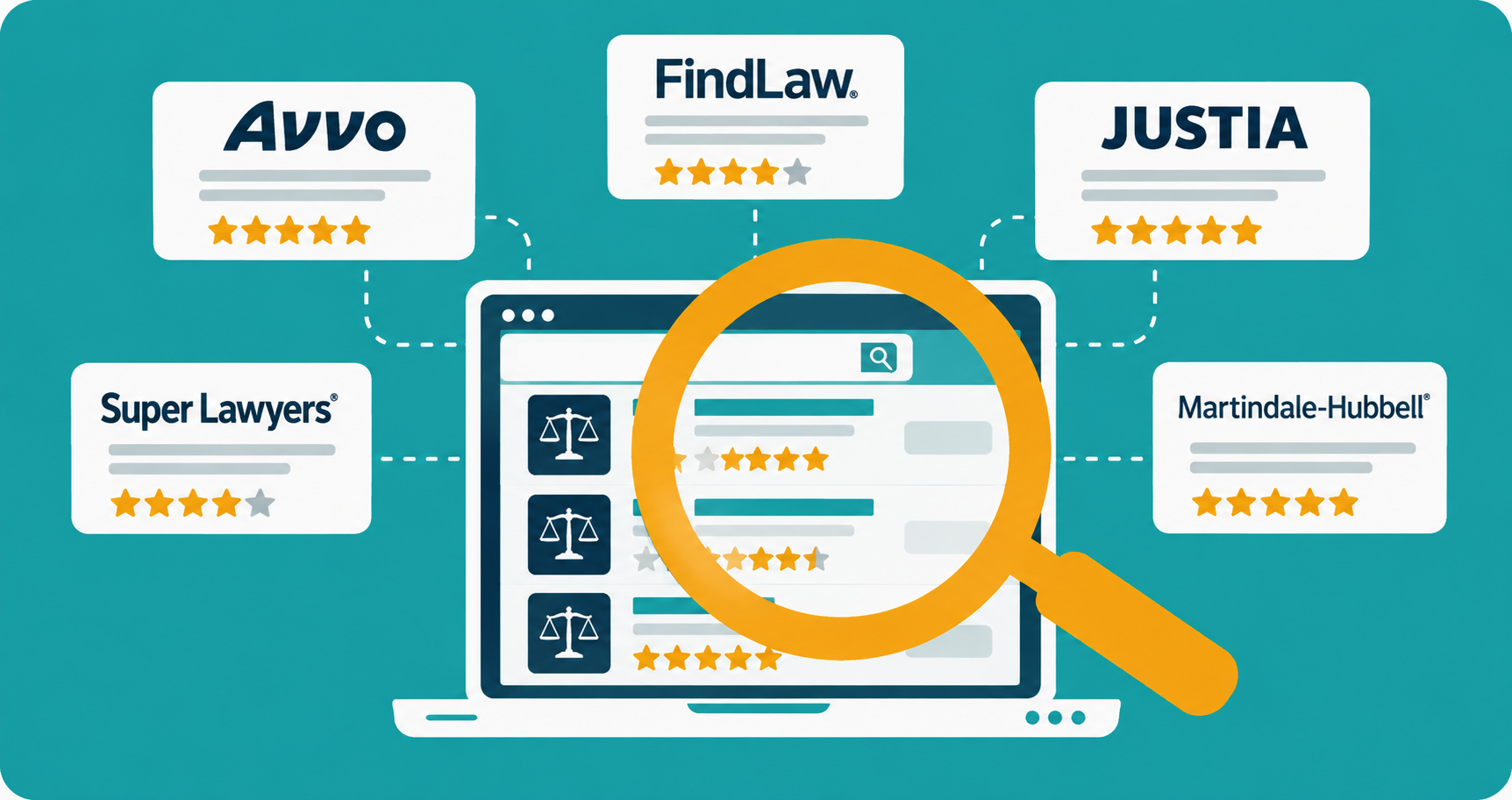
Illustration of paid lawyer directories websites displaying attorney profiles, law firm listings, and client ratings.

Overview:

Join other SEO and marketing professionals staying up-to-date with TruLaw Marketing.

Key Takeaways

  • Some paid lawyer directories are worth the money because they help people, search engines, and AI tools find useful information about your firm. The value depends on the directory and what the premium profile adds beyond the free version.

  • Buying a premium profile does not mean you need the directory’s advertising package. Look for useful profile features, a website link, and visibility in relevant searches and AI citations, and ask what you’re actually getting before paying.

  • Not every legal directory deserves a spot in your budget, even if your competitors are paying for it. We strongly recommend some, consider others optional, and help clients skip the ones that don’t justify the cost.

Some of them, but not for the reasons you think.

I recommend certain paid lawyer directories to my clients. I also routinely tell them not to buy the advertising those same directories are selling.

When I recommend a premium attorney profile, I’m usually thinking about how it supports the firm’s overall presence online. I’m not expecting the directory to start sending great cases.

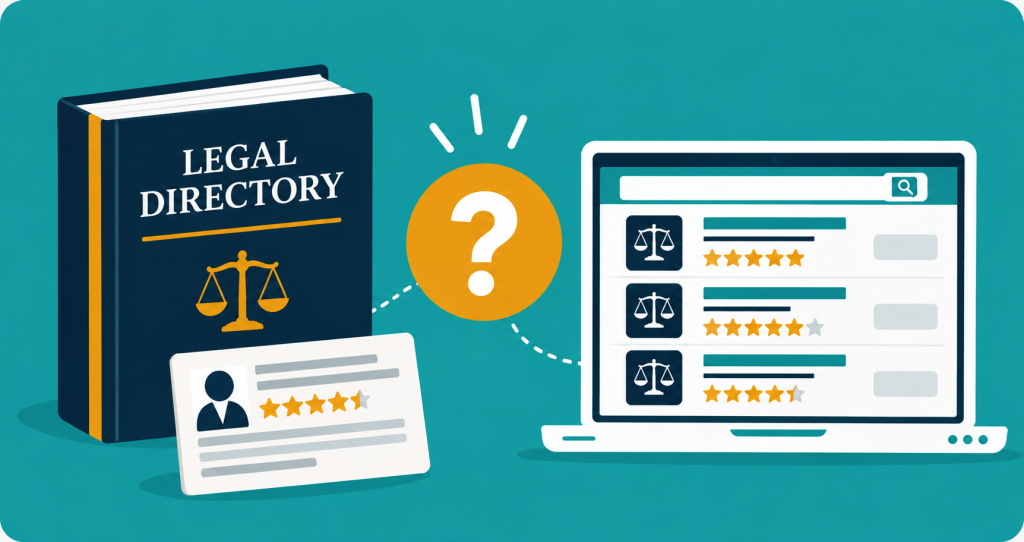
Illustration comparing a printed paid lawyer directories with online paid lawyer directories.

In fact, in the decade I’ve been doing this, I have never seen legal directory advertising generate a good case. That’s my experience, and other people may have had different results. But it explains why I’m particular about what I tell clients to buy.

There are directories I strongly recommend, others I consider optional, and some I would leave out of the budget entirely. The trick is knowing which is which and what you’re actually paying for.

Why I consider some legal directories a necessary evil

Google and AI tools have to get their information about attorneys somewhere. Your website is one source. Legal directories are another.

Some of these directories are established legal websites with years of attorney profiles, legal information, and links behind them. They give search engines and AI tools somewhere to look when researching who practices in a particular market and what kind of work they do.

As an attorney, you know a more impressive directory profile doesn’t necessarily mean a better lawyer. Sometimes it means someone took the time to fill it out. Sometimes it means someone paid for additional features.

That distinction can get lost when information from those profiles is summarized into a search result or an AI answer.

Google does know paid links exist. It has specific instructions for marking paid links as sponsored. A premium listing does not automatically buy you better rankings.

But I also wouldn’t assume every system researching your firm will explain the difference between an attorney’s qualifications and the profile features they purchased.

My concern is what those systems can actually find about you. In a competitive market, I don’t want clients overlooking useful profiles on legal websites that appear in relevant searches.

Whether those profiles need to be paid is a separate question.
Your competitors have complete profiles. Yours is empty.

This is the situation I want clients to avoid.

The attorneys you compete with have complete profiles on established legal directories. Their biographies explain their experience. Their practice areas are accurate. Their websites are linked. Their locations and contact information match what appears elsewhere.

Then there’s your profile: a name, an old address, and a practice area you haven’t focused on in years.

You may be the better attorney. Your online presence isn’t doing much to communicate that.

I wouldn’t claim Google sees a missing premium listing and decides you aren’t good enough. There’s no established rule that works that way. But your competitors have provided information you haven’t. They have made themselves easier to research.

That matters for SEO and for being found in answers generated by AI, sometimes called answer engine optimization, or AEO. Bing’s guidance connects clear, discoverable information with eligibility for its AI answers and citations.

This is why I take directory profiles seriously. Your own website shouldn’t be the only place that accurately explains who you are and what you do.

Try asking an AI tool to recommend a lawyer

Here’s an exercise you can do yourself.

Open ChatGPT, Claude, or another AI assistant with web search enabled. Ask something specific:

“Recommend personal injury attorneys in [city] who handle serious truck accident cases. Explain why you chose them and include your sources.”

If the tool lets you expand its search activity, open it. Look at the sources it shows you and the citations in the answer.

Do legal directories appear? Which ones? Are your competitors listed there? Are you?

Try it again for another city or practice area. You won’t necessarily get the same sources or attorneys each time.

You may see directories appear early in the visible research or cited in the final answer. That gives you a way to check whether they are being used for searches relevant to your firm.

If an AI tool cites a directory, that tells us the directory is being used. We still need to check whether paying adds anything useful beyond the free profile.

It doesn’t prove a premium subscription caused an attorney to be recommended. But if a directory keeps appearing in relevant searches, I’d want to take a closer look at it.

How I decide whether a paid directory is worth it

If I’m recommending a directory for your overall online presence, I want to know:

  • Does it appear in searches relevant to your practice and location?
  • What information can we put on the profile?
  • What does payment add that the free version doesn’t include?
  • Can people and search tools access the information?
  • Is the additional benefit worth the cost?If you’re buying advertising, I’m asking a different question: Is it producing qualified inquiries and signed cases at a cost that makes sense?A directory can have a useful role in your online presence without being a good advertising purchase. And a recognizable name doesn’t automatically make its premium package worth buying.I put directories into three categories.There are the ones I strongly encourage clients to have. There are the optional ones, where my advice is: “If the core pieces are covered and you have the budget, it’s a reasonable extra. It isn’t where I’d start.” Then there are the ones I discourage because the offering doesn’t justify the expense.At TruLaw Marketing, we have a list of recommended directories for premium profiles. Contact us if you want to know which ones we would prioritize for your firm and which ones can wait.

What’s the difference between a free profile, a premium profile, and advertising?

The names can be confusing, so here’s a concrete example.

Justia offers free attorney profiles, enhanced profiles, and paid directory placements. Those aren’t all the same thing.

  • Free Justia profile: A professional profile with features such as a headshot, client reviews, and practice FAQs.
  • Enhanced profile through Justia Connect Pro: Removes competitor ads from your profile, makes contact information more prominent, and adds a contact form and membership badge.
  • Gold or Platinum placement: Adds sponsored visibility within directory listings. Gold positions rotate; Platinum offers a fixed top position. An enhanced profile is included.

You can compare the free and sponsored options in Justia’s directory feature comparison. Its FAQ about enhanced profiles also explains that the enhanced profile available through Connect Pro is identical to the one included with a premium placement.

That is why the exact product matters. If you want the enhanced profile, you should understand the membership option before assuming you need to buy sponsored placement.

It’s also a reminder to look closely at the free version. Some useful features may already be included.

Do you need the directory’s advertising too?

My answer is usually no.

If I recommend a premium attorney profile, don’t take that as a recommendation to buy the top sponsored spot, banner ads, or whatever lead package comes up on the sales call.

Those purchases need to justify themselves separately.

As I mentioned earlier, I haven’t personally seen legal directory advertising produce a good case in the decade I’ve been doing this. That’s why I don’t tell clients to add advertising just because they’re already buying a profile.

Being at the top of a directory doesn’t mean you’ll be at the top of Google. It also doesn’t guarantee inclusion in an AI answer.

Pay attention to the language during the sales pitch. “Premium,” “enhanced,” “featured,” and “placement” can mean different things depending on the company. Some packages bundle profile features with advertising, which can make it difficult to tell what you’re paying for.

Before signing, ask:

“Can I get the profile features without buying the advertising?”

Then have them spell out the options and pricing in writing.

If the package includes advertising you don’t want, evaluate the full price against the features you actually need. Sometimes there’s a better product for your purpose. Sometimes the free profile is enough.

If you have a directory proposal in front of you, send it to TruLaw Marketing. We’ll help you separate the profile features we recommend from the extras we wouldn’t prioritize.

Does every attorney need a paid profile?

No. If you’re paying by the attorney, my recommendation is to start with just one profile.

You don’t need to buy a premium spot for everyone at the firm just because the directory offers to sell you one.

If you’re a personal injury firm with five attorneys in one city, I wouldn’t automatically buy five premium profiles. I’d start with one.

If another attorney leads a distinct SSDI practice or works in a separate geographic market, that may be the next profile I’d prioritize.

When the budget allows, I generally recommend at least one relevant attorney profile per market. That can mean a geographic market or a practice area, such as personal injury, mass torts, SSDI, or qui tam.

The profile should represent an attorney who actually works in that market or handles those cases.

This is how I recommend allocating the budget. It isn’t a Google requirement, and it doesn’t guarantee AI visibility.

If you only have the budget for one, get one. Pick the attorney and market that matter most to the firm, and do that profile well. Complete the other attorneys’ free profiles wherever appropriate.

You still have to fill out the profile

Buying the listing isn’t the whole job.

I don’t want clients paying for a profile with two sentences, an outdated headshot, and a generic list of practice areas.

Explain what the attorney does, who they help, where they practice, and what experience they bring. Include accurate credentials, contact information, and the website link wherever the directory allows it.

Most importantly, make sure it agrees with your website.

If your attorney bio focuses on serious injury litigation, the directory shouldn’t make you sound like a general practitioner who handles a little of everything. If there’s a clear reason clients choose your firm, that should come through in the profile too.

You don’t need to copy and paste the same biography everywhere. But the facts and the message should be consistent.

That includes the boring details: firm name, office address, phone number, website, and practice areas. Update them when something changes.

A premium subscription doesn’t fix inconsistent information. You still have to do that work.

Already paying for directories? Check before renewing.

You may already have several directory subscriptions and no clear idea what each one includes.

Before the next renewal, ask for an itemized breakdown of what you’re buying. Check the renewal date, cancellation deadline, and what happens to the profile if you downgrade.

Will you lose information or features you actually use? Will the free profile remain? Does cancellation remove the profile, or just stop the advertising?

You may be paying for an ad package you don’t need. You may also be paying for an upgrade that adds very little to the free version.

If advertising is included, look beyond the directory’s report of impressions and clicks. Check your own intake records. Did the inquiries fit your practice? Did any turn into cases worth handling?

For a profile purchased to support your broader online presence, revisit the original reason for buying it. Does the directory still appear in relevant searches? Are the paid features still useful? Is there a less expensive way to get them?

Don’t keep renewing simply because the invoice looks familiar.

So, are paid lawyer directories worth the money?

Some are. But I’d be selective.

There are certain attorney profiles I consider important enough to recommend to clients competing online. That doesn’t mean every directory needs your money, every attorney needs a paid profile, or every profile needs an advertising package attached to it.

When I evaluate a premium profile, here’s what I look for:

  • Can we add more useful information than the free profile allows? I want room to explain the attorney’s experience, practice areas, credentials, and the types of clients they help. If the paid version doesn’t let us say anything more meaningful, that limits its value.
  • Can we add a link to the firm’s website? I check whether a website link is included and how it is marked. An ordinary followed link, often called a “dofollow” link, is preferred.
  • How strong is the directory itself? We factor in website authority metrics, relevant organic traffic, keyword rankings, and whether its attorney profiles appear in search results. An authority score is one input. It isn’t a Google score or enough by itself to justify the purchase.
  • Does it show up for your market? A directory can have substantial traffic without much visibility for your practice area or location. I care about the pages relevant to your firm.
  • How often do AI tools cite it? We look for directories that appear repeatedly in sources for relevant lawyer searches across different questions and tools. One citation doesn’t prove much, and it doesn’t prove you need the paid version. Repeated appearances give us a reason to investigate.
  • Are we buying profile features or advertising? A better biography, additional information, and useful contact options are profile features. Paying to rotate through a sponsored spot is advertising. Calling the package “premium” doesn’t change that.

Be careful with advertising dressed up as a premium profile. Ask exactly what changes on the profile itself. If the main benefit is temporary placement at the top of a directory page, evaluate it as an advertising purchase.

Start with the directories that matter to your practice. Check what’s free. Pay when the additional features justify it. Then make sure the profile accurately represents the attorney and the firm.

Want our recommended legal directory list or a second look at what you’re already paying for? Contact TruLaw Marketing. We’ll help you decide what to buy, what can wait, and what you can stop paying for.

Frequently Asked Questions

Jordan Terry Headshot 2025

Jordan Terry

As the Director, Jordan oversees many operations of TruLaw Marketing.

Before joining TruLaw Marketing, Jordan was the Director of Marketing at a mass tort law firm.

While there, his data-driven strategy established the firm as an industry leader in digital marketing — leading to a more than 400% increase in client acquisition.

Related Posts

Looking to learn more?

The posts below may be helpful for you to learn more about content marketing & SEO.